What Is Facial Balancing? A Full-Face Approach to Injectables in Tampa
Injectables Guide
Facial balancing is a way of planning, not a set list of injections: looking at the face as a whole, considering proportion, and only then deciding whether anything should be treated.
Some people arrive at an injectable consultation with one specific line in mind. Others arrive with something harder to name — a sense that the face looks tired, or heavier along the lower half, without a single feature that clearly explains it.
If the second description sounds familiar, you may have come across the term facial balancing. It is often misread as a fixed procedure with a set list of injections. It is better understood as a way of planning: looking at the face as a whole, considering proportion, and only then deciding whether anything should be treated.
At Elixir Aesthetics in Tampa, that planning conversation comes first. The purpose of this article is to explain what a full-face approach involves, what a provider generally assesses, and what a sequence of appointments may look like — so you can arrive at a consultation with better questions rather than a preselected treatment.
Facial Balancing Is an Approach, Not a Single Procedure
Facial balancing describes the practice of evaluating the entire face — upper, middle, and lower thirds — and considering how neuromodulators and dermal fillers might be used together to support proportion, rather than treating one area in isolation.
Two things follow. First, there is no standard facial balancing treatment; what suits one person may not suit another, and some patients may be advised that little or no injectable treatment is indicated. Second, it is not a synonym for treating many areas at once. A thoughtful plan may involve fewer areas than expected, or a different area than the one that prompted the visit.
The common thread is order of operations: assessment, then discussion, then a proposal your provider can revisit and adjust over time.
Why the Whole Face Is Assessed Rather Than One Area
Features are read in relation to one another. How a jawline reads in profile may have as much to do with chin projection as with the jawline itself. How deep a fold appears in the midface may relate to volume higher on the cheek. A line that looks like a skin concern may be driven largely by repeated muscle movement, or the reverse.
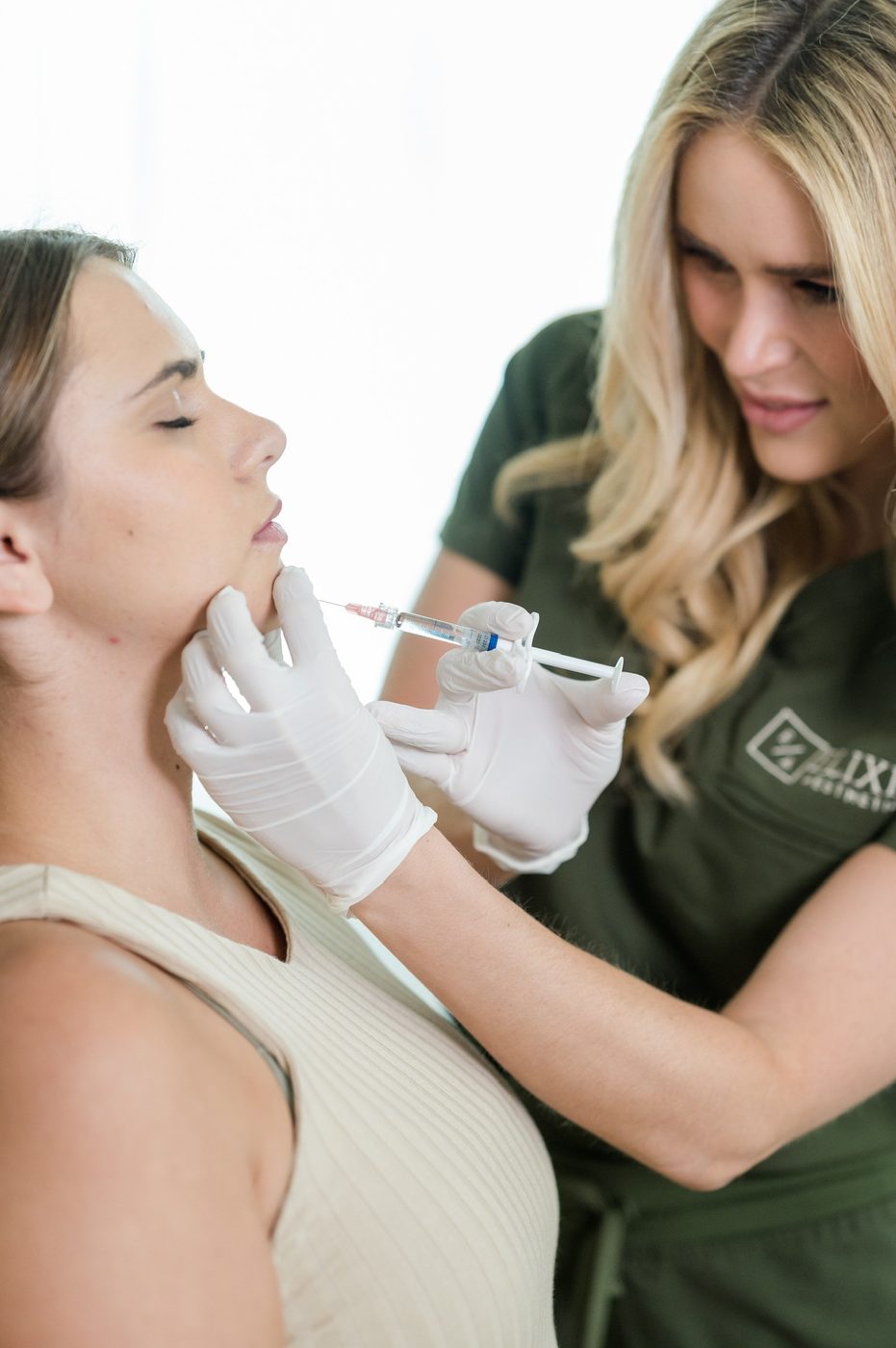
Because of that, a full-face assessment usually looks wider than the concern a patient walks in with. Depending on your anatomy and goals, your provider may consider:
- The facial thirds and how they relate to one another in height and width
- Projection and contour in profile, not only what is visible straight on
- Symmetry at rest compared with symmetry during expression
- Skin quality and laxity, which may influence what injectables can reasonably address
- Movement patterns, since some lines are largely dynamic and others are not
- Your treatment and medical history, including prior injectables and anything affecting candidacy
None of this predicts an outcome. It is the information a provider needs before a plan can be discussed honestly.
Neuromodulators and Dermal Fillers Do Different Things
The two product categories discussed in most facial balancing plans are not interchangeable. In broad terms, neuromodulators are used to soften muscle activity, while dermal fillers are used to add volume or support contour.
| Consideration | Neuromodulators | Dermal fillers |
|---|---|---|
| General purpose | May be used to temporarily reduce targeted muscle movement | May be used to add volume or support structure in a treated area |
| Concerns often discussed | Expression lines and movement-related asymmetry | Volume loss, contour, and projection |
| How change tends to appear | Gradually over the days following treatment | Often visible right away, with swelling that settles afterward |
| Duration | Temporary; commonly described in months and varies by person | Temporary; varies considerably by product, area, and individual |
| Adjustability | Effects wear off over time; your provider can assess before retreatment | Some products may be adjustable or dissolvable — ask your provider which apply to you |
Timelines above are general, not a prediction for any individual. Your provider can set expectations based on an in-person assessment and the specific products discussed.
What a Facial Balancing Consultation Covers
A planning appointment is largely a conversation. The clinical assessment matters, but so does establishing what you actually want — which is often different from what social media has been showing you.
What your provider may ask you
- What you notice first when you look at a photograph of yourself
- Whether your concern is about a feature at rest, in movement, or in profile
- How much change you are comfortable with, and how visible you want it to be
- Whether you have events, travel, or procedures scheduled in the coming weeks
What is reasonable to ask in return
- Which areas are being proposed, and what each one is intended to address
- What changes if one area is left untreated for now
- Which risks and side effects apply to the specific areas discussed
- How the plan would be sequenced, and what would be assessed between visits
- What the follow-up process looks like if something needs adjusting
A consultation may also end without a treatment plan. That is a legitimate outcome, particularly if a provider believes the result is unlikely to meet your expectations.
What a Sequence of Appointments May Look Like
Facial balancing is described as a plan rather than an appointment because providers often prefer to work in stages. The general pattern looks something like the following, though specifics depend entirely on the individual.
Assessment and discussion
The first visit centers on evaluation, medical history, photographs where appropriate, and a discussion of what may or may not be advisable. Whether treatment can occur at that same visit is a practice-specific question your provider can answer.
Initial treatment
If you proceed, a first stage may focus on the areas your provider considers foundational. Treating fewer areas at the outset can make it easier to judge what the next stage should address.
Reassessment
Neuromodulator effects develop over days and filler swelling settles afterward, so most providers prefer to reassess once things have settled rather than layering on more treatment immediately.
Refinement over time
Later visits may involve adjustment, maintenance, or nothing at all. Because these products are temporary, a plan is revisited rather than finished.
Aftercare and the Days Following Treatment
Aftercare instructions vary by product, area, and provider. Your practice should give you guidance specific to what you had done, and that guidance takes precedence over anything read online.
That said, common post-injectable instructions may include:
- Remaining upright for a period after treatment, as directed by your provider
- Avoiding vigorous exercise, saunas, hot tubs, and significant heat exposure for a short period
- Avoiding pressure, massage, or rubbing of treated areas unless specifically instructed otherwise
- Being mindful of alcohol and certain supplements or medications, which may affect bruising
- Using sun protection while any swelling or bruising resolves
- Contacting the practice promptly about severe pain, significant or increasing swelling, skin color changes, or vision changes
In Tampa, heat and humidity are worth factoring into scheduling. If you have beach days, boat plans, or an outdoor event coming up, mention it during planning so timing can be discussed beforehand.
Risks, Limitations, and Candidacy
Injectable treatments are medical procedures and carry risk. Bruising, swelling, tenderness, redness, lumps or firmness, and asymmetry are among the more commonly discussed side effects. Less common but more serious complications are also associated with these treatments, including vascular events with dermal fillers and unintended spread of effect with neuromodulators.
There are also limitations. Injectables are not a substitute for surgery, and significant skin laxity or underlying skeletal structure may not respond meaningfully to them. Some individuals may not be appropriate candidates at all, including those who are pregnant or breastfeeding and those with certain medical conditions or a history of reactions to these products. Your provider can assess candidacy in person and should discuss the risks that apply to your plan.
What Influences the Cost of a Facial Balancing Plan
Cost is a reasonable question, and also a difficult one to answer meaningfully before an assessment, because facial balancing is not a single item with a single fee.
The factors that generally influence a plan include the number of areas addressed, how much product is appropriate for each, which product categories are used, whether treatment is staged across visits, and how often maintenance is desired. Your provider can discuss what applies to you during consultation, along with the practice’s current pricing and any consultation policy.
Frequently Asked Questions
Is facial balancing just getting Botox and filler at the same time?
Not exactly. Receiving both in one visit is common, but facial balancing refers to the planning logic behind the choices — assessing proportion across the whole face first — rather than to any specific combination of products.
How much does facial balancing cost?
It depends on the plan, since the number of areas, the products discussed, and whether treatment is staged all affect it. Pricing is best discussed during a consultation, once your provider has assessed what may be appropriate.
How many appointments does it take?
That varies by individual and by how a provider sequences care. Many plans involve an assessment, an initial treatment stage, and a reassessment, with further visits determined by what is observed along the way.
Will I look overdone?
No provider can promise a specific appearance, but a proportion-led plan is generally intended to work with your existing features rather than reshape them broadly. Saying clearly how much change you want, and asking to start conservatively, is a reasonable part of that conversation.
How long do the results last?
Both categories are temporary, and duration varies by product, treatment area, and individual factors such as metabolism and muscle activity. Your provider can give a realistic range for the products in your plan.
Is there downtime?
Many people return to routine activities the same day, but swelling, bruising, or tenderness may occur and can last longer for some people than others. If timing matters for an event, plan a buffer and discuss it beforehand.
What does facial balancing aftercare involve?
Typically a short period of avoiding heat, strenuous exercise, and pressure on treated areas, plus sun protection while anything resolves. Your provider will give instructions specific to your treatment, and those should be followed over general advice.
Can it be reversed or adjusted if I do not like it?
Neuromodulator effects wear off over time. Some filler products may be adjustable or dissolvable, though not all are, and that is something to confirm with your provider before treatment rather than afterward.
Talk Through a Full-Face Plan at Elixir Aesthetics in Tampa
If you have been researching facial balancing and are still not sure whether it applies to you, that is exactly what a consultation is for. An in-person assessment is the only way to determine what may be appropriate for your anatomy, your history, and what you actually want to change.
A consultation at Elixir Aesthetics in Tampa is a conversation before it is anything else. You can bring photographs, past treatment details, or nothing more than the sense that something looks off. Your provider can assess your features, explain what a proportion-led plan might involve, discuss the risks that apply, and tell you plainly if injectables are not the right route.
To take the next step, contact Elixir Aesthetics in Tampa to schedule a consultation and discuss whether a full-face approach makes sense for you.
Schedule a consultation